Direct answer
Managed IT Services UAE from Kaizen Star are built for multi-branch companies, Dubai head offices with branches in Sharjah or Abu Dhabi, warehouses, clinics, retail groups, education teams, and SMEs that need central IT ownership without building a large internal department. The service combines helpdesk, remote monitoring, onsite escalation, Microsoft 365, cybersecurity, backup, firewall, network, server, cloud, CCTV, cabling, and hardware AMC under one accountable support model.
Managed IT services in the UAE are different from a simple annual maintenance contract. A maintenance contract reacts when equipment fails. A managed service takes responsibility for daily IT operations, monitoring, security hygiene, backup health, user support, and escalation before a problem stops work. That distinction matters for UAE businesses because many operate across more than one site, depend heavily on Microsoft 365 and cloud systems, and still keep physical infrastructure such as firewalls, switches, WiFi, CCTV, access control, printers, and local servers.
Kaizen Star Technologies LLC structures managed IT support around real operating conditions in Dubai, Abu Dhabi, Sharjah, Ajman, DAFZA, JAFZA, Dubai South, Al Qusais, Business Bay, JLT, and other UAE business zones. The service is not limited to a remote ticket desk. It combines monitoring, remote resolution, onsite attendance, project support, vendor coordination, documentation, and monthly accountability. That is why it fits companies that need one provider to understand the whole environment rather than several vendors passing responsibility between each other.
The strongest use case is a business that has grown beyond ad hoc repair support but is not ready to hire a complete IT team. A company may have 20 to 100 users, multiple Microsoft 365 licenses, a firewall, WiFi access points, shared folders, CCTV, a backup system, and a mix of laptops and desktops. Hiring a full internal team for that environment can be expensive. Relying on a single junior administrator can also create risk. Managed IT gives the company access to helpdesk, network, cloud, security, and infrastructure skills through a planned monthly model.
What Kaizen Star manages under this service
Managed IT should cover the operational systems that staff depend on every day. Kaizen Star defines scope before support begins so the client knows which users, devices, locations, systems, and escalation paths are included. The exact contract can be adjusted by business size, but the managed service normally includes the following areas.
- 24/7 monitoring for servers, firewalls, internet links, endpoint health, backup jobs, storage capacity, and security alerts.
- IT help desk support with phone, email, WhatsApp, and ticket-based intake for user issues, VIP escalation, and recurring incident tracking.
- Ticket handling with logging, categorization, prioritization, investigation, escalation, resolution notes, closure, and monthly trend reporting.
- Network security management covering firewall rules, VPN, WiFi segmentation, endpoint protection, MFA, patching, email security, and vendor escalation.
- Data protection and disaster recovery checks for local backup, cloud backup, Microsoft 365 backup, NAS devices, retention policies, and restore readiness.
- Remote IT helpdesk for Microsoft 365, Outlook, Teams, user accounts, MFA, printer mapping, VPN, workstation faults, and common business application access issues.
- Onsite engineer escalation in Dubai and the wider UAE when a fault cannot be resolved remotely or when physical infrastructure needs inspection.
- Cloud services and Microsoft 365 administration for users, licensing, Teams, SharePoint, OneDrive, Entra ID, Azure, email security, and backup coordination.
- Domain and email security management including DNS, SPF, DKIM, DMARC, anti-phishing controls, mailbox security, and mail-flow troubleshooting.
- Server management for Windows Server, virtualization, storage, backup jobs, patching, performance, uptime alerts, and hardware health.
- Infrastructure management across firewall, WiFi, switching, structured cabling, CCTV, access control, server, cloud, backup, and endpoint security.
- Remote managed services using monitoring tools, endpoint agents, backup alerts, security checks, capacity warnings, and monthly performance reviews.
- Technical support services for onsite incident response, hardware replacement coordination, warranty/RMA follow-up, spare-device planning, and vendor management.
- Monthly reporting that shows tickets, recurring issues, backup status, patch progress, security risks, asset changes, and recommended improvements.
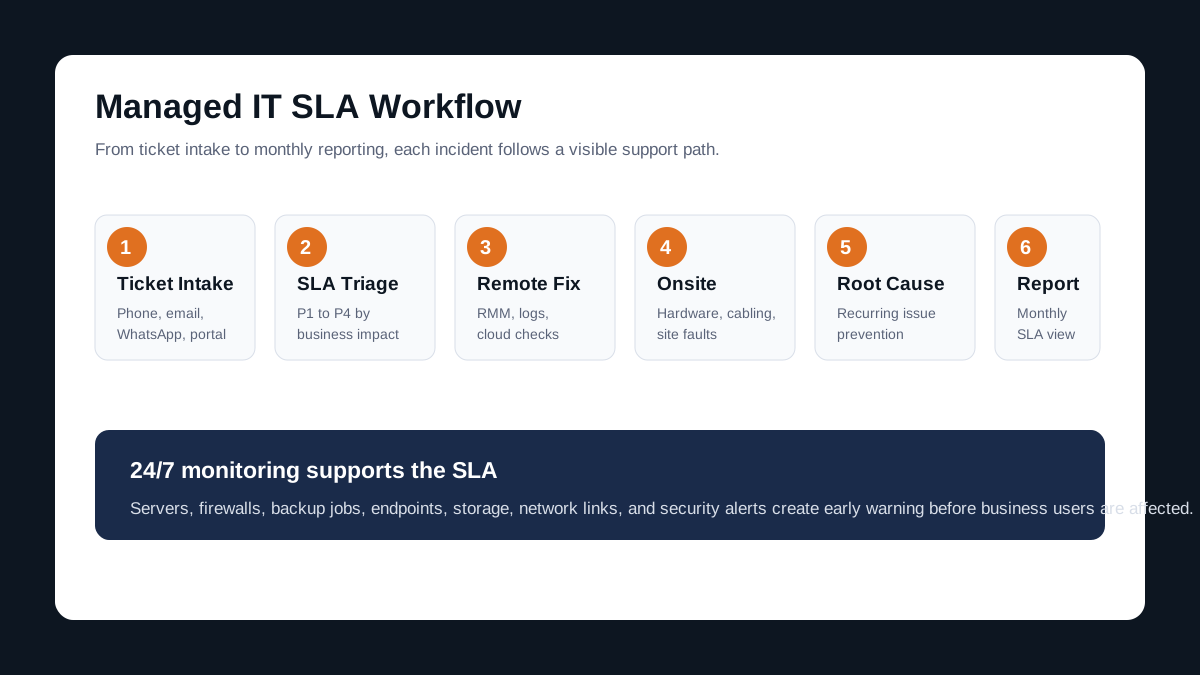
Ticket handling workflow
A managed IT page should not stop at a list of services. Buyers need to know how a support request moves through the system. Kaizen Star uses a structured ticket workflow so issues are not lost in WhatsApp messages, personal emails, or informal calls. Every request should create a support record with the user, device, location, impact, category, priority, action taken, escalation owner, resolution, and closure note.
24/7 support, monitoring, and escalation model
Many competitors mention 24/7 support, but buyers should understand the difference between monitoring, helpdesk response, and onsite escalation. Monitoring means systems are watched for alerts. Helpdesk response means a human engineer acknowledges and works the ticket. Onsite escalation means a UAE-based engineer attends the location when the issue is physical, high impact, or cannot be resolved remotely. Kaizen Star can combine these layers based on business risk.
For standard offices, business-hours helpdesk with critical emergency escalation may be enough. For logistics, hospitality, healthcare, retail, and multi-shift operations, extended-hours or 24/7 response may be justified. The SLA should state severity levels clearly: critical outage, high-impact department issue, individual user issue, and planned service request. This keeps urgent incidents from being diluted by routine tickets and keeps support cost realistic.
The practical advantage is continuity. Backup alerts can be checked before data is lost. Firewall or internet problems can be triaged before staff arrive. Microsoft 365 account problems can be resolved without waiting for an onsite visit. A recurring printer or WiFi issue can be documented and escalated to root cause instead of being treated as a new event every time.
Visible SLA module for managed IT buyers
| Severity | Example scenario | Remote response model | Onsite escalation | Monitoring coverage |
|---|---|---|---|---|
| P1 Critical | Business-wide internet, firewall, server, email, or backup-impacting outage. | Immediate triage within the contracted critical-response window. | Dispatched when physical infrastructure, hardware, cabling, or site access is required. | 24/7 monitoring recommended for servers, firewalls, backup, storage, and critical network devices. |
| P2 High | Department, branch, VIP user, warehouse zone, clinic reception, or shared printer/system issue affecting revenue. | Priority remote troubleshooting with senior escalation if unresolved. | Scheduled or urgent visit depending on operational impact. | Business-hours or extended-hours monitoring depending on risk. |
| P3 Standard | Single-user laptop, Outlook, Teams, printer mapping, account, license, or access request. | Handled through helpdesk queue under agreed SLA. | Only if remote support confirms a physical device or local-site problem. | Endpoint and Microsoft 365 monitoring where included. |
| P4 Planned | User onboarding, hardware refresh, firewall rule change, license cleanup, cabling, or scheduled maintenance. | Planned through change window and approval process. | Booked as scheduled onsite work where required. | Reported monthly as preventive maintenance and improvement work. |
How this helps different companies
Corporate offices
Centralized support for user onboarding, device setup, email, Microsoft 365, file access, printing, meeting room connectivity, VPN, WiFi, firewall rules, and executive escalation.
Logistics and warehouse operations
Monitoring and support for warehouse WiFi, barcode workstations, printers, CCTV, access control, dispatch office systems, internet continuity, and after-hours operational incidents.
Clinics and healthcare offices
Support for reception workstations, doctor rooms, secure WiFi, appointment systems, backup checks, endpoint protection, Microsoft 365, and fast escalation when patient workflows are affected.
Retail and branch businesses
Remote-first support for outlets, POS coordination, staff devices, email, CCTV, branch WiFi, firewall appliances, internet failover, and management reporting across locations.
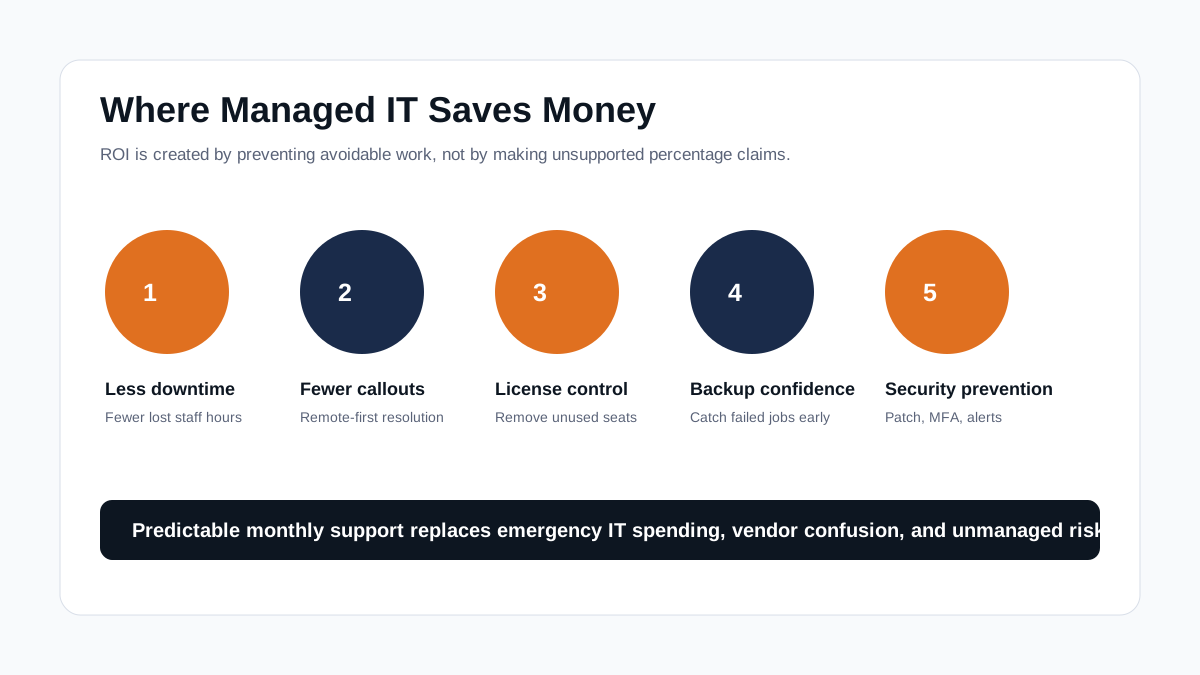
How much money managed IT can save
A UAE company does not save money only by replacing one salary. The larger saving comes from avoiding idle staff hours, emergency repair bills, repeated vendor visits, failed backups, weak handovers, and unmanaged security incidents. If 30 employees lose two hours because email, WiFi, or a shared system is down, the cost is not just an engineer visit. It is 60 working hours lost, delayed client replies, missed operational cutoffs, and management time spent chasing updates.
For many SMEs, a managed IT contract can be more predictable than hiring one full-time IT administrator plus separate specialists for firewall, Microsoft 365, backup, server, CCTV, cabling, and cybersecurity. Salary is only part of the equation. Companies also need replacement cover, training, tools, escalation, and documentation. Managed IT spreads those capabilities across a team, which is why it can reduce total support cost even when the monthly fee looks higher than break-fix support.
Kaizen Star avoids claiming a fixed saving percentage because savings depend on user count, downtime cost, existing infrastructure, and how many problems are currently recurring. Instead, the onboarding assessment identifies where money is being lost: unstable WiFi, unmanaged licenses, repeated printer issues, weak backups, old firewalls, unpatched devices, or staff waiting for manual account setup. The proposal then connects each support activity to risk reduction or productivity gain.
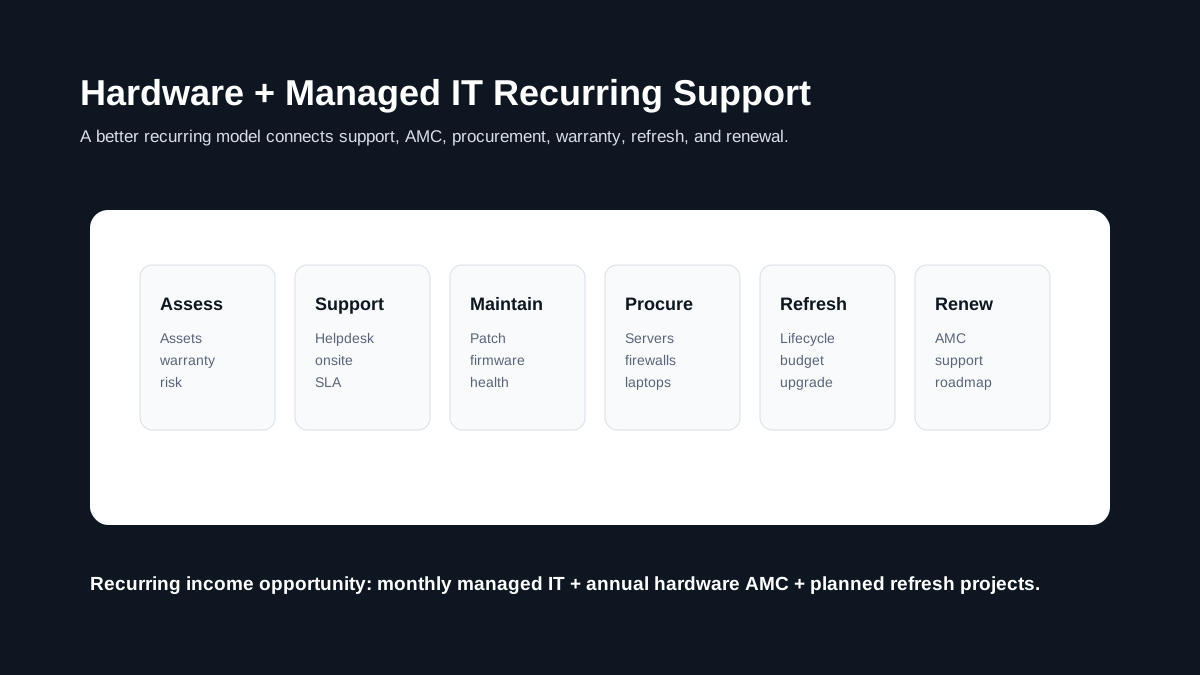
Hardware, AMC, and recurring support revenue model
For many UAE companies, managed IT should connect software support with hardware lifecycle management. Laptops, desktops, servers, firewalls, switches, access points, NAS devices, UPS units, CCTV recorders, printers, and cabling all affect uptime. If these assets are not under a planned support model, the business ends up buying replacements in emergencies, paying one-off visits, and losing control of warranties, spares, and refresh timing.
Kaizen Star can structure recurring IT support around both operations and hardware. That means the monthly or annual contract can include asset register maintenance, warranty tracking, preventive checks, firmware coordination, hardware health review, firewall and switch lifecycle planning, server maintenance, NAS/backup device checks, UPS review, and procurement guidance. For the client, hardware spend becomes planned instead of reactive, and support decisions are backed by asset records, ticket history, warranty status, and risk level rather than urgent guesswork.
The strongest offer is a combined model: managed IT for daily operations, IT AMC for physical infrastructure, and hardware refresh planning for devices that are aging out. A 30-user office may need endpoint support, Microsoft 365, firewall management, backup monitoring, and planned replacement of laptops over 24 months. A warehouse may need WiFi access point maintenance, switch monitoring, UPS checks, CCTV recorder health, label printer coordination, and spare-device planning. A clinic may need reception PCs, secure WiFi, backup devices, printers, and endpoint security reviewed as part of one support rhythm.
Cost drivers and pricing logic
| Cost driver | Why it changes the monthly fee |
|---|---|
| Users and endpoints | More users and devices create more tickets, patching, onboarding, endpoint security, and asset management work. |
| Support hours | Business-hours support costs less than 24/7 human response. Some clients combine 24/7 monitoring with emergency-only after-hours escalation. |
| Locations | Multi-site companies need branch documentation, remote monitoring, travel planning, standardized setup, and location-specific escalation. |
| Infrastructure complexity | Servers, firewalls, VLANs, warehouse WiFi, backup appliances, CCTV, access control, and hybrid cloud environments require stronger engineering coverage. |
| Security and compliance | Endpoint protection, MFA, firewall reviews, backup validation, admin access control, and audit-ready documentation require ongoing governance. |
Why UAE companies choose Kaizen Star
Kaizen Star Technologies LLC is a strong fit when a company wants one UAE IT partner to own the daily support layer and the physical infrastructure layer together. The team works across managed IT, IT AMC, Microsoft 365, cybersecurity, backup and disaster recovery, firewalls, network infrastructure, WiFi, CCTV, access control, structured cabling, servers, cloud, and onsite engineering. That matters because real incidents rarely stay inside one neat category. An email outage may involve DNS, licensing, MFA, endpoint profiles, and firewall filtering. A warehouse issue may involve WiFi design, switch health, barcode devices, cabling, and internet failover.
Kaizen Star is a practical MSP for UAE SMEs and operational businesses that need responsive support, direct engineering access, flexible AMC contracts, competitive pricing, and service coverage across Dubai, Abu Dhabi, Sharjah, Ajman, Ras Al Khaimah, Fujairah, and Umm Al Quwain. This is not a remote-only helpdesk offer. It is a managed support relationship that can include onsite escalation, hardware maintenance, asset tracking, warranty follow-up, lifecycle planning, and monthly reporting so owners and managers can see where their IT spend is going.
Implementation process
The first step is a discovery review. Kaizen Star documents users, devices, Microsoft 365, internet, firewall, switches, WiFi, printers, servers, backup, security tools, vendors, locations, and recurring pain points. The second step is risk cleanup: admin access, backup checks, endpoint protection, password and MFA posture, critical device inventory, and support contacts. The third step is onboarding into monitoring and ticketing. After that, the service moves into monthly operations: ticket response, preventive maintenance, reporting, and improvement planning.
This process is important because a managed IT provider cannot support what it does not know. Many companies ask for faster support while having no firewall password, no network diagram, no backup report, no asset list, and no clear Microsoft 365 admin ownership. Kaizen Star treats documentation as part of support, not as optional paperwork.
What happens in the first 30 days
The first month is where a managed IT relationship succeeds or fails. Kaizen Star does not treat onboarding as a formality. The team reviews administrative access, identifies unsupported devices, checks Microsoft 365 ownership, confirms backup status, documents firewall and internet details, lists high-risk users, records vendor contacts, and maps recurring problems that staff have learned to work around. This produces a practical support baseline for Managed IT Services UAE, not a generic asset spreadsheet.
During the first 30 days, the support team also separates quick wins from structural fixes. A quick win may be removing unused Microsoft 365 licenses, correcting MFA settings, documenting printer IP addresses, or installing endpoint protection on missing devices. A structural fix may require firewall replacement, better warehouse WiFi design, backup redesign, switch cleanup, server migration, or a new user onboarding process. Both matter, but they should not be mixed into one vague support promise.
The first monthly report should show what was found, what was fixed, what remains risky, and what should be budgeted next. This gives owners, operations managers, finance teams, and internal IT staff a clear view of the environment. It also helps prevent the common situation where a company pays for managed IT but still does not know who owns passwords, backups, firewall access, cloud licenses, or escalation during an outage.
Managed IT assessment guide
Before signing any managed IT contract, buyers should ask for an assessment that covers people, process, hardware, software, security, backup, and vendor ownership. Kaizen Star uses this assessment to avoid thin proposals and to identify recurring-income opportunities that genuinely help the client: hardware AMC, endpoint replacement planning, firewall support, Microsoft 365 administration, backup ownership, remote monitoring, onsite escalation, and scheduled preventive maintenance.
The assessment should answer these questions: Which assets are supported? Which hardware is near end of life? Which warranties are active? Which Microsoft 365 licenses are unused? Which backups are failing? Which systems need 24/7 monitoring? Which users or departments create the most tickets? Which issues are repeating? Which vendors need coordination? Which projects should be sold separately from monthly support? The new Managed IT Assessment Guide Dubai page turns this checklist into a buyer-facing resource that can support lead generation.
Service boundaries and realistic expectations
A good managed IT contract should be honest about boundaries. Kaizen Star can manage support, monitoring, escalation, documentation, Microsoft 365, endpoint security, backup checks, firewall and network coordination, and onsite engineering within the agreed scope. Some items may still depend on third parties: ISP faults, vendor-specific application bugs, hardware replacement stock, warranty claims, or software licensing decisions. The difference is that Kaizen Star can coordinate the technical side instead of leaving the client to explain the issue repeatedly to each vendor.
This is especially important for companies comparing many Dubai and UAE providers. A low-price proposal may look attractive but exclude onsite visits, after-hours escalation, backup responsibility, cybersecurity review, firewall changes, or vendor coordination. A higher-quality proposal should define what is included, what is excluded, what response times apply, and how recurring issues are handled. That clarity protects both sides and gives the business a more realistic view of cost, savings, and operational risk.
Selected UAE managed IT support examples
Kaizen Star's managed IT and hardware support model is relevant to logistics, industrial, media, trading, distribution, and building-material companies across the UAE. Selected support environments include Royal Cargo in Garhoud and JAFZA, Aesthetix Industries in Jebel Ali Industrial Area 1, Mediaquest in Dubai Media City, Hamburg General Trading in Sharjah Industrial Area 17, and Tuleila Heat Insulation in Dubai Investment Park 2.
Royal Cargo LLC
Logistics and warehouse IT support environment in Garhoud and JAFZA, Dubai.
Aesthetix Industries LLC
Industrial and office IT support environment in Jebel Ali Industrial Area 1, Dubai.
Mediaquest Corp.
Media and publishing office IT support environment in Dubai Media City.
These logos are a limited public sample, not the full client list. Kaizen Star has served 500+ clients and deployments across UAE office, logistics, industrial, healthcare, hospitality, retail, education, and corporate environments, supported by 50+ certified engineers and vendor-aligned specialists. Full references can be discussed privately during proposal or procurement review.
Managed IT search intent across the UAE
UAE buyers use slightly different wording depending on the business problem. A finance manager may search for managed IT services UAE or IT managed services UAE because they want predictable monthly support. An operations manager may search for managed IT support UAE, multi-branch IT support UAE, or IT support company UAE because they need one team to handle branches, warehouses, clinics, and offices across more than one emirate.
Kaizen Star answers that intent with a scoped support model: users, devices, branches, firewalls, servers, Microsoft 365, backup systems, endpoints, CCTV, WiFi, support hours, onsite escalation, hardware AMC, exclusions, and monthly reporting are documented before the contract starts. This gives a buyer comparing UAE MSP options a clearer basis than a generic price list.
Supporting buyer language
Remote IT monitoring UAE is relevant when a company needs alerts for servers, firewalls, backup jobs, internet links, endpoint health, and storage capacity before staff report a problem. Microsoft 365 support UAE fits companies that need user administration, licensing, Teams, SharePoint, OneDrive, Entra ID, MFA, mailbox security, and backup coordination. Backup disaster recovery UAE matters when data recovery, retention, restore testing, and Microsoft 365 backup ownership must be visible in the contract.
Endpoint management UAE and device lifecycle planning are important for businesses with laptops, desktops, warehouse devices, reception PCs, clinic workstations, and remote users. Kaizen Star can combine endpoint support with hardware AMC, warranty tracking, procurement guidance, and replacement planning so device problems do not become repeated emergency purchases.
Related managed IT pages
Frequently asked questions
Does Kaizen Star provide managed IT services across the UAE?
Yes. Kaizen Star is based in Dubai and supports UAE organizations with remote helpdesk, monitoring, onsite escalation, Microsoft 365 administration, firewall and network support, backup checks, endpoint security, and infrastructure maintenance.
Is 24/7 support included for every client?
24/7 monitoring can be included for managed environments. Human response coverage depends on the agreed SLA tier. Some businesses need business-hours support with emergency escalation, while logistics, hospitality, healthcare, and multi-branch operations often need extended or 24/7 response.
Can managed IT support reduce internal IT costs?
It can reduce total cost by replacing ad hoc repairs with predictable monthly support, reducing downtime, preventing recurring faults, and giving access to several IT skill sets without hiring separate specialists. Actual savings depend on the current environment and SLA scope.
What makes Kaizen Star different from a generic remote MSP?
Kaizen Star combines remote monitoring with UAE-based onsite engineers and infrastructure capability across networks, firewalls, Microsoft 365, servers, backup, CCTV, access control, cabling, and cybersecurity.